Articles About Dr Fouzia Saeed
July 10, 2016
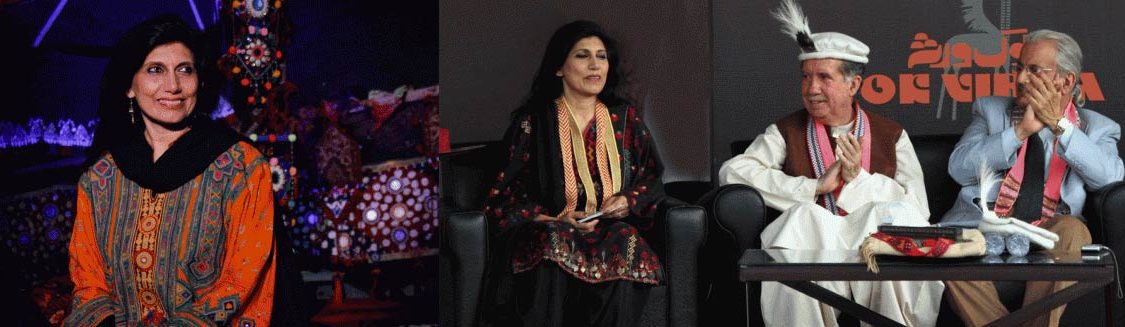
Profile: Dr Fouzia Saeed, Executive Director Lok Virsa
“The Lok Virsa is labelled as one of the breakthroughs in the gloom, some good news from Pakistan,” says Dr Fouzia Saeed, speaking of what she calls the organisation’s recent revival where she has been executive director for over a year now. She took some time out for this interview despite the constant knocks on her office door.
“I’ve steered Lok Virsa’s strategy towards objectives that are angled very differently. Previously the focus was on documentation, preservation, collection and some programming, following the Virsa’s mandate to preserve, document and promote cultural heritage,” says Dr Saeed, explaining her own programming-rich approach. “The most important focus is our cultural identity – we are South Asian people and have to connect with history much before 1947 and Muhammad bin Qasim. We must own all the cultural layers, religions, ethnicities and all kinds of communities with pride,” she says emphatically. “Shanakht is strength.”
The Islamabad-based Lok Virsa was the folk culture offshoot of the first Pakistan National Council of the Arts (PNCA) established in 1972, of which Faiz Ahmed Faiz was the first chairman. Another offshoot under Faiz’s PNCA patronage was the Pakistan Academy of Letters, with Ahmed Faraz as its first chairman. Lok Virsa began as the Folklore Research Centre to document oral literature, as envisioned by Uxi Mufti, then producer of PTV’s Lok Tamasha, which had documented the relatively unknown folk music of Pakistan. Later, the centre’s mandate was extended beyond research to include non-verbal folklore and emerged to become the Lok Virsa of today.
The present Lok Virsa comprises the Heritage Museum, also known as the Ethnology Museum of Pakistan, which presents the history and the living traditions of the people of the country. It houses the Virsa Media Centre, Research Centre, Publishing House, Heritage Library, the Video and Sound Archive, and the Monument Museum in Shakarparian. Lok Virsa is one of the largest publishers of traditional music – folk, classical and instrumental – and has a huge collection of audio and video material. Unfortunately, a substantive amount of the archives and recordings were smuggled out of the country and sold abroad in recent years, but to date no measures have been taken to investigate the issue.
Dr Fouzia Saeed came to the Lok Virsa at a time when the standards at Pakistan’s only folk heritage repository had been deteriorating for a decade or so. “In 2004, everything was outsourced by my predecessors, Uxi Mufti and Mazhar-ul-Islam, and I inherited a staff of over a hundred who were not doing very much!” The Lok Virsa outsourced the archives, heritage museum, open-air theatre, production house, the annual Lok Mela, and other cultural events, including sale of entry tickets and cafeteria operations, to one company, in an agreement which was in violation of rules and was passed without approval from Lok Virsa’s board of governors. The renewal of the contracts also did not fulfil the rules and formalities of procedure.
Dr Saeed was emphatic about the two or three significant changes she was planning to make. “I told my staff, you talk about your institution – well, it’s not really ours, it belongs to the awaam, we are keeping it for them and are here for them.” Her emphasis on serving the public is a consistent refrain. “In these past few years, the Virsa had become like the chota of the ruling elite to provide entertainment and colour to government functions.” This positive turnaround to serve the people is clearly Dr Saeed’s mantra and she prides herself on getting a lot of people on board, including the current Federal Minister for Information, Broadcasting and National Heritage, Senator Pervaiz Rasheed. Recently, the Prime Minister asked Senator Rasheed and Attaullah Qasmi to draft a culture policy and the Lok Virsa was asked to take the lead in developing the draft, consulting experts in all the provinces, especially Sindh and Balochistan. “Culture has been devolved and very few platforms have been left under the national umbrella” she says. “And since Lok Virsa is a national institute, we have to be very just in the way we promote culture, since we are a combination of so many cultures. Gilgit Baltistan (GB) and Balochistan were high on the priority list for the first year and for the first time the GB government officially took part in the annual Lok Mela last year. Similarly, the Sindhi community – there is a large number in the twin cities – and the Hazara community, were also brought on board to participate in cultural events. “On Nauroze we held a special festival which resulted in a lot of healing for the Hazara community, who were in tears and so moved because we accepted them as a cultural entity. It was heartening to see that the audience was in perfect tune with the Farsi singers, proving that the Persian rubaiya is also our culture, not just the Punjabi chimta. In the same way, the rich culture of the Northern Areas is immensely valuable, as is the Marwari, Khwaar, Wakhi, Seraiki, Shina among the variety of sub-cultures and languages in every province.”
Promoting the slogan ‘Diversity Within’ is high on Dr Saeed’s to-do list. She organised the ‘Mother Languages Literature Festival,’ with two other partners, featuring 25 regional languages. In April this year, the Islamabad Literature Festival (ILF), organised annually by the Oxford University Press, was held for the first time at the Lok Virsa, showcasing an extensive programme highlighting literary and cultural diversity.
“The new generations are slipping away and losing their cultural identity; their perception of culture is so narrow and monolithic and we need to address that. There must be something wrong with our institutions,” says Dr Saeed, explaining that the primary target for Virsa programming are children and youth and several interventions with specific programmes have been made in schools. “In the earlier days we were purists, but now we need to relearn the best way to connect with the younger generation,” she says, outlining new strategies such as social media and online interaction.
Saeed has extended the definition of folklore to also encompass cultural behaviour from recent times: “Folklore is not necessarily ancient: and it’s not just about a cow grazing in the fields and a flute player…” She also finds that the constituency of culture has never been organised, and to cover that gap has introduced some new initiatives such as the creation of ‘Autaq,’ an umbrella for a network of small tanzeems/ organisations to foster good relations with the cultural department of provinces and work with organisations that link directly with the populace. Interestingly, she has also begun to promote what she categorises as folklore from recent times. “I like putting small groups together, pagal, pagal sey, she says, like the ‘Mandwa’ film club which aims to recreate the environment of cinemas of a couple of decades back to show that folklore doesn’t have to be rural, nor does it have to be the antithesis of modernisation. Mandwa has shown some iconic films over the past year and Saeed has gathered a like-minded group of people, such as acclaimed director Aijaz Gul, who decide collectively what they will screen. It could be Aina– an iconic Pakistani film that was released in March 1977, or even Mastana Mahi and Heer Ranjha.“Community engagement is an important priority to inculcate ownership of projects. Therefore, inducting volunteers was key, especially experienced ones, for example, the core group of the Mandwa film club are volunteers,” she says.
Programming-wise, Saeed is working on themes such as ‘Women Reclaim Culture’ built on a discourse on ‘Indigenous Feminism’ with the aim of making women conscious of the spaces and activities which are gradually being taken away or are becoming male-dominated. She has organised activities like the ‘dholak geet contest’ to promote women’s creative expression via the dholak, an instrument that has largely been in the female domain, and is especially used at weddings. The event provides a legitimate space for females to learn, bond and share information and wisdom. Saeed bemoans the fact that women are pushed into the background in a lot of cultural activity in Pakistan, whether it be folk dance or folk music; she hopes to bring women from across provinces and remote areas like Thar and the north of Pakistan to the forefront.
Public response to recent changes has been positive and they have come to the Virsa in throngs. Non-flash photography is allowed in all public areas of the Virsa in order to rev up social media-sharing on all platforms; live streaming of events like the annual Lok Mela is available on the Virsa website; the ‘Craft of the Month’ training programme with master artisans in pottery, lacquer, natural dyes etc. has been introduced to acquaint children and adults with this region’s civilisational past and crafts. There is a constant hunt for new artists and new groups have been formed, including a children’s ensemble comprising 15 boys and girls that the Lok Virsa hopes to take abroad for cultural programmes. Links with local museums and international forums is another priority and the Lok Virsa has partnered with the Lahore Museum recently and aims to garner the support of the Library of Congress and the Smithsonian to help with the archives, among other things.
When it comes to institutional challenges, Dr Saeed inherited quite the behemoth when her three-year tenure began just over a year ago, and her aim is to make the governance structure institutionally strong. Several steps were taken; the Lok Virsa reconstituted its board, since there had been none for nearly two-and-a half years before her arrival. She wrote a new set of rules which is pending approval from the ministries – this had to be done because even though the organisation was reconstituted in 2002 through an act of parliament in the Musharraf era, no rules were written. No appointments have been made for the past 26 years (since 1990) – and cannot be made till the rules are approved. Dealing with an embedded bureaucracy has been quite a challenge. Many officials gave themselves an 800 per cent raise in pension, which has now been declared an unauthorised decision by the Lok Virsa board. Officials also took loans and treated them as grants; a host of petty corruption issues plagued the organisation, and a lackadaisical set-up didn’t help matters either. Interestingly, accounts are still being maintained in pencil in registers. “Mine is a clean-up mission,” says Dr Saeed. “I’m trying to rejuvenate and diffuse corrupt elements.” Despite facing personal attacks in the media from disgruntled elements, she plans to continue her mission to bring the Virsa up to a certain standard and build a good team in the remaining two years of her tenure.
“How will folk culture get more space?” we ask Dr Saeed in conclusion. She is of the view that culture needs to be pruned all the time and choices must be made, in the same way as you eliminate poisonous weeds when you grow wheat. Her strategy is to couch traditional culture in a manner as to make it palatable for the younger generation. “I cannot stick to my purist ethics and compete with cultural consumerism. I have to make folk culture attractive and not undermine it, to create a vast outreach.” Her decisions so far have been at par with her progressive outlook. “My focus is to change the environment, revive each section and bring it back to life. We have to develop ownership, and institutions such as this one should become the priority of the people.”


June 12, 2014
Wilson Center Appoints 2014-15 Pakistan Scholar
WASHINGTON — The Woodrow Wilson International Center for Scholars, in collaboration with the Fellowship Fund for Pakistan (FFFP), today announced the appointment of Dr. Fouzia Saeed as the Wilson Center’s new Pakistan Scholar. Saeed will spend nine months in residence at the Wilson Center beginning in September 2014, working on a book on Pakistani women and how their successes at the micro-level have the potential to influence national policy and institutions.
Saeed is one of Pakistan’s most distinguished women’s rights activists. She has worked for decades on women’s issues, especially those linked to violence against women, prostitution, women’s mobility, and sexual harassment. She is the author of Taboo: The Hidden Culture of a Red Light Area, and Working with Sharks: Countering Sexual Harassment in Our Lives.
Saeed will succeed Khurram Husain, the Wilson Center’s 2013-14 Pakistan Scholar. During his stay at the Center, Husain worked on a book looking at the political economy of reform in Pakistan over the past two decades.
The Pakistan Scholar Program is the centerpoint of the Wilson Center’s Pakistan initiative. The fellowship competition is open to men and women from Pakistan or of Pakistani origin. Applicants must be based in Pakistan. Applications are accepted from individuals in academia, business, journalism, government, law, and related professions. Candidates must be currently pursuing research on key public policy issues facing Pakistan, research designed to bridge the gap between the academic and the policymaking worlds. The selection process is a two-tier process, consisting of application evaluation and personal interviews conducted by an independent, international Advisory Council of the FFFP, composed of eminent individuals from the fields of politics, diplomacy, business, economics, academia, and journalism, and followed by final selection by a Wilson Center selection panel.
The Fellowship Fund for Pakistan, a charitable trust based in Karachi, was established in 2003 to provide Pakistan’s most eminent thinkers with opportunities to participate in international deliberations on current and future issues facing Pakistan through dialogue with global opinion leaders and policymakers, scholars, and other experts. FFFP seeks to promote non-partisan scholarship at international forums in order to encourage free, informed, and serious dialogue on issues of public interest.
The Woodrow Wilson International Center for Scholars is the living, national memorial to President Wilson, created by Congress in 1968 and headquartered in Washington, D.C. The Wilson Center provides a strictly nonpartisan space for the worlds of policymaking and scholarship to interact. By conducting relevant and timely research and promoting dialogue from all perspectives, it works to address the critical current and emerging challenges confronting the United States and the world.
September 24, 2012
Combating sexual harassment: Dr Fouzia Saeed to be recognised for her services
KARACHI: Social activist Dr Fouzia Saeed has been recognised for her services by the Washington Oxi Day Foundation.
The foundation chose Dr Saeed for its Battle of Crete Award, which honors women who have contributed to freedom and democracy in their countries. Last year, the award was presented to Nobel Peace Prize Laureate Aung San Suu Kyi.
The Battle of Crete Award is named after the women of Crete, Greece, who fought against the invading Nazi forces at the Battle of Crete, 1941, in The Second World War. It will be presented to Dr Saeed in October this year.
The award aims to acknowledge her struggle against sexual harassment and comes after the publication of her book ‘Working with sharks: Countering sexual harassment in our lives’. The book, published in December 2011, documents her work against institutionalised sexual harassment at the United Nations’ offices in Islamabad.
Saeed’s 13-year-long fight for justice at the UN spawned a movement for the rights of working women, and eventually to the criminalisation of sexual harassment in Pakistan.
The movement, called the Alliance Against Sexual Harassment (Aasha) was launched in 2001 and engaged all segments of society, including government officials, the International Labour Organisation and the private sector. Aasha influenced 300 organisations to voluntarily adopt a policy against sexual harassment.
Finally in 2008, Dr Saaed drafted two pieces of legislation to curb sexual harassment at formal and informal workplaces, including public spaces and homes. After intense lobbying, the bills were unanimously passed by the National Assembly and by a heavy majority in the Senate in 2010. The comprehensive law against sexual harassment is the first of its kind in South Asia.


December 24, 2011
Book launch: Fouzia Saeed tells every woman’s story
At: THE EXPRESS TRIBUNE
KARACHI: It takes immense courage to tell your story of sexual abuse, and after 14 years Fouzia Saeed has told the world.
“I realised that if I wanted other women to speak up, I first had to speak for myself,” the social activist said at the launch of her book “Working with Sharks” in Karachi on Friday.
As she briefly spoke about her struggle and the harassment she faced in her professional life, the women in the audience listened intently, nodded in agreement as if her story was their own.
“I used to think I had gone beyond what happened, but while writing this book I went through a lot. There were times when I would sit alone and cry and did not know why I was crying… When you talk about yourself, you realise how vulnerable you are.”
There were 100 men and 16 women at the UNDP office in Islamabad where I worked and of those 16, 15 had been sexually harassed, she said. “All of the women had similar stories, the same things had been said to them, the same phone calls had been made… all of us suffered for years only because we did not talk.”
It was when one of the women came to talk to Saeed about her suffering that she realised that something now needed to be done. “But once a woman talks it’s as if she becomes a leper, people do not want to be near her… She is the witch and then begins the hunt.” The stand Saeed took on December 22, 1997 by filing a complaint against the harassment, finally culminated in legislation passed in March 2010, which makes sexual harassment a crime.
With no speech prepared, Sharmila Faruqi, adviser to the chief minister, spoke passionately about the issue. “Every woman can relate to this book. I am advised by cabinet members on how I should wear my dupatta and what the length of my sleeves should be,” she said.
It takes a lot of courage to stand up and tell your story. By telling society what she went through, Fouzia has opened herself to public scrutiny, she said. “Please stand up for yourself, it’s time we do so, it’s time to stand up against the sharks,” she said emphatically.
Farooqi, director Sahira Kazmi and singer Tina Sani reiterated the need for the media to highlight social injustices in society and follow up the cases. “In this country we remain silent half the time. We are silenced before we can talk,” Sani said.
Hosting the show, Adnan Malik said that at an auction to raise funds to increase awareness for sexual harassment, the first copy of the book was bought for Rs125,000 by women in different countries working for the United Nations. The second copy was auctioned at Rs110,000, while the third copy was purchased for Rs100,000. A copy of the book will be sent to the UN Secretary-General in New York. As is inevitable, a man stood up after the floor was opened for questions and said: “What about the harassment men face? I’ll write a book on that.” A roar of laughter followed his comment and Saeed’s expressions grew stern. It was obvious that she had heard such things often enough and would not let the comment pass. “This laughter is my motivation. We have to cut through this laughter for people to take this issue seriously. People need to understand that this is not a bloody, trivial joke.”

April 21, 2011
Implementing the 18th Amendment, Taking the lead
Fouzia Saeed
Raza Rabbani stands behind the 18th Amendment but where is everybody else? Provincial chief ministers and chief secretaries should prepare to adopt new roles.
Adjust Font Size The Friday Times The Friday Times.
The intrigues are brewing up in all circles, senior officials want to hang on to power, personal connections are being used to save jobs, and screams are heard every time a meeting is held to figure out the fate of a ministry.
Now is the time for the provinces to shift gears and move away from a grievance mode to a performance mode. The provincial leadership needs to show to their people that this challenge will be met.
Ministries are being transferred to the provinces one by one, but we don’t see the people dancing in the streets. While bureaucrats are maneuvering to save their jobs and the comforts of Islamabad, why are the provincial political parties are not mobilising? While politicians who did not make it into the smaller cabinet are criticising the 18th Amendment, why are the senior leaders of the ruling parties not blocking the sabotage attempts? While the media is joining in to save the jobs of influential bureaucrats, why aren’t the people of the provinces defending what they got after a decades-long struggle?
The devolution of power to the provinces and the abolition of the concurrent list was a major part of the 18th Constitutional Amendment. Civil society, provincial political parties, nationalist groups, provincial governments and most importantly the people of the provinces had been asking for provincial autonomy. Everyone had pinned their hopes on Senator Mian Raza Rabbani as he led the Parliamentary Committee on Constitutional Reforms. The outcome of a long tedious and well managed process was hailed by all the political parties. The consensus was unprecedented. The law was passed smoothly by the parliament. Minor problems with the judiciary were sorted out.
But the process of implementation of the 18th Amendment, especially the devolution of the major portfolios to the provinces, has not seen the same kind of support from the major political parties. It is as if the ball has been thrown into the bureaucratic arena and the political leadership has gone on a vacation. A pattern we have seen so often.
The dynamics of this process have been quite entertaining, especially for the residents of Islamabad. The intrigues are brewing up in all circles, senior officials want to hang on to power, personal connections are being used to save jobs, and screams are heard every time a meeting is held to figure out the fate of a ministry.
Such minor issues as a promotion due one month after the ministry’s devolvement are being blown up in an attempt to prove that the new system will not work. The favourite word in Islamabad these days is confusion – coined to undermine the historic initiative. The word is catching on in the provinces too. It is being ensured that any hurdles that can be thought of are used to slow down the process. Many are praying for an early election, before the ministries are devolved, or for a messiah to take charge and reverse the process.
But while the bureaucracy makes all that noise, the supporters of the 18th Amendment are nowhere to be seen. Where did all those people go? Was provincial autonomy only a slogan to channel people’s anger against the federation? If not, we should see strong visible support for the process, and an active debate in the provinces on how to take charge and welcome all the new responsibilities. There should be an enthusiasm to prove that the provinces can govern their people better. The chief ministers and chief secretaries should be talking to the political and bureaucratic leadership to prepare them to take on new roles.
The media, which had criticised the government for the size of the federal cabinet and the strong hold of the federation over the provinces, are now supporting intrigues and scandals being manufactured to save jobs of the bureaucratic elite in Islamabad. The intention might only be to continuously criticise the government – which in their minds is ‘accountability’ – but major achievements of this nation are being undermined and the media are becoming a party to it, intentionally or unintentionally.
For example, in the case of the HEC, the media did not look at the merits and demerits of the devolution, or on the process by which the provinces should build the capacity to take care of the universities, but connected the issue to the validation of the degrees of parliamentarians. HEC’s mobilisation of students and teachers of universities, and rallies supported by educational institutions, are being shown as genuine protests by the usually very sceptical media.
The Ministry of Women’s Development mobilised development donors and some NGOs to argue that devolving the ministry is an anti-women measure and will undermine all progress made so far. Women’s rights activists and gender specialists opposed that, saying women’s issues should also go to the provinces because they are not isolated. These issues should be gender-mainstreamed in every ministry and at all levels, they said, and the Ministry of Women’s Development should have used the one-year transition period to work closely with the provinces rather than sitting in denial.
In a situation where most of the provincial political leaders seem to have gone on a break and the people are indifferent, how strong will Senator Raza Rabbani hold? So far it seems his own weight has been enough to move the process forward. Living in Islamabad, one hears a lot of grumbles from within his own party where people are unhappy because of personal losses linked to the process, but one can see that he must have had some assurance from the senior leadership that he is not backing off. Not all constitutional provisions have been implemented, after all.
Now is the time for the provinces to shift gears and move away from a grievance mode to a performance mode. The provincial leadership needs to show to their people that this challenge will be met. They have the systems and the portfolios are not new. Their capacities might be low, but in certain areas that was the case with the federal ministries too. The provinces need to reach out to intellectuals and those with skills and talent should come forward and help out. After all those mistakes, bad policies, corruption and militancy, Pakistan deserves to see this one good thing. It will change the course of our political history.
April 4, 2011
Promoting pluralist folk heritage is vital for Pakistan’s future
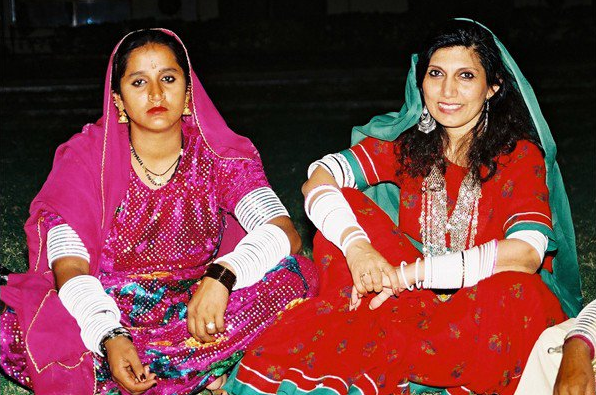
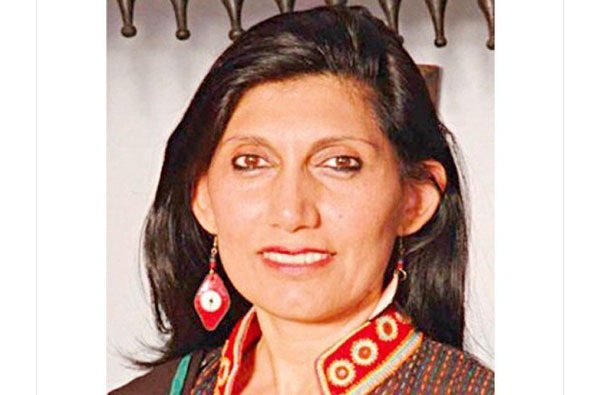
Dr Fouzia Saeed, a scholar and civil society activist, was recently appointed as the head of Lok Virsa – the premier government institution to conserve and promote cultural heritage. After years of inaction and treating folklore as a commodity to be sold at melas and cafes, it is somewhat encouraging that a professional is in charge of an important institution. Fouzia is a renowned folklorist. Her well-researched book ‘Forgotten Faces: The daring women of Punjabi theatre’ traces the lives of women actors active in folk theatre during the 1960 and 70s. Another publication on the lacquered work of Dera Ismail Khan is a useful reference on an old craft that continues to be practiced.
Earlier, Fouzia led the movement for promotion of Manganhaar music encouraging younger people to participate and take pride in that activity. On PTV Fouzia interviewed many artists who had quit performing arts. As the founding member of Sanjh Theatre, she has been actively engaged with the folk arts. In 1988, she joined Lok Virsa as a Deputy Director, Research, and produced a record number of publications. In 1989 she set up a private organization – The Folklore Society – that she still chairs. Fouzia’s best known initiative remains Mehergarh – a Human Rights institute – that provides leadership training and helps build an alternative discourse on culture and society. Her PhD in Education and academic training in anthropology led to her award winning book ‘Taboo’ that explores the stigma on performing arts in Pakistan; and is now being used as a textbook in many countries.
We spoke to Fouzia as she was leaving for Islamabad to take charge of the institution.
Going back to Lok Virsa as its head must be a homecoming of sorts?
Yes, Nostalgic! When I joined it in 1988 I had just completed my education from the USA and was so full of enthusiasm. It was a thriving and creative place! There was a tea khokha on one side and we used to have samosas there and come up with creative ideas for our programs. I really got groomed there. It is great to come back to it. All these past years I used to call it my ‘maika ghar’ (parental abode). I know almost all the people there, I also know its glorious as well as subdued past quite well. With all the affection for Lok Virsa, it is great to be back. Not just for the staff and colleagues but also the folk artists that I have maintained close contacts with. They are thrilled and I am thrilled!
How would you comment on what has been happening to the institution in the last few years?
One big issue is determining the priority. How important cultural institutions are to a government or a nation. Are they just there to create some entertainment or is there more vision to it. Secondly, I think the politics really tends to deteriorate an institution. When institutional heads embody a lot of power and think that any one who differs from them should be silenced, the ability to motivate a team gets depleted. The talented people become disgruntled and not so talented ones count on praising the boss, whether right or wrong. Sometimes these people take favours and become loyal to individual boss rather than the institution. These are very common problems in institutions of Pakistan. However the unique thing about Lok Virsa is that there are still people there who are committed to their work and to the institution. It is due to these talented people that I believe there is a very good chance of reviving the institute.
Why has Lok Virsa not been able to make the kind of impact that was imagined at the time of its creation?
If a nation decides to imitate the West and call it modernization, then folk culture turns into decoration pieces in modern houses; or takes the shape of souvenir gifts. If a nation thinks of its folk heritage and be embarrassed or feel it is outdated then the folklore dies and with it the pride of being who we are. The philosophy of Lok Virsa has always been that folk expressions are living arts. In the past, people used to sing songs about local heroes, adhere to traditions that evolve and stay relevant. We don’t have to stop that process.. One question that I ask of myself is whether it will be okay for me to wear a lacha to my work. If the answer is no, I would say, it is not my choice or that I am concerned about people laughing at me? If incorporating our own folk dresses folk, colours and folk crafts into our lives is embarrassing then either we need to transform them or we question the low value we have put on to them. This is a good question for people to test themselves.
I think drifting away from what Faiz Sahib gave as an outline for cultural policy and not being able to institute an overarching vision, were the reasons why Lok Virsa seemed like an an event planning institute to some.
What are the key challenges to the institution and how will you fix them?
I think Lok Virsa used to have one of the most creative teams. Appointments based on political considerations or nepotism based postings affect institutions. Limited budget is another challenge to deal with.
At a larger level unless our folk artists have a market, the institute cannot give them stipends so we have to develop the taste and a market for folk arts. Currently, youngsters do not have exposure or access to what our folk music is. The market is full of Bollywood and modern bands. Therefore, one needs to think of ways to develop the taste of our youth to their folk heritage and its living manifestations.
I think one institute alone cannot do this job. We need to network with provincial arts councils and think of collaborative ways of developing the taste of our youth for their folklore. For the in-house challenges, I think the team needs to be motivated and I am very confident that we would work together very well.
Shouldn’t institutions like Lok Virsa be independent of government control and run by artists, artisans and culture experts?
Lok Virsa is an autonomous body. But let me add that the government should have a mandate to document and promote our cultural heritage. At the same time, such institutions require autonomy to make decisions and hire talented people. Theoretically the institute was conceived like a combination of both. I will soon find out where the balance is. The Minister and the relevant officials of the Ministry, I believe, will be supportive to the institute.
Pakistan’s plural, folk culture is under threat. Can Lok Virsa play a role in its preservation without the necessary political changes in country’s policy?
I think everything does get linked to the political situation in the country. I hope the nation stays united in dealing with the current challenges. However, Lok Virsa can definitely play a role in bringing unity in diversity. The recognition of the pluralistic past of our country where common people lived in harmony can serve as a guide for the future.
In the current context where devolution of powers to provinces has somewhat empowered our provinces, Lok Virsa can play a significant role in bringing that diversity together and celebrating it.
What are the three things you are going to do immediately?
I think an Executive Director facilitates to articulate and implement a vision. It is the teamwork, commitment to our fields and loyalty to the Institute that matters. I would do the housekeeping first to get the teams in place for various specialized tasks and budgets readjusted for the next financial year. Then I would reach out to all the cultural institutions and develop links to form a network for future collaboration. Finally, I would also reach out to the folk artists and crafts people to assure them that this is their institution and seek their support.
February 2, 2011
Another stint: Dr Saeed new Lok Virsa executive director
ISLAMABAD:
Renowned rights activist Dr Fouzia Saeed has been appointed as the executive director of Lok Virsa. Saeed confirmed the news to The Express Tribune on Sunday.
She is currently working on her book at Woodrow Wilson Centre in Washington DC as a Pakistan Scholar. She has been widely known for her campaign for raising voice on human rights in Pakistan.
Her earlier work with the Folk and Traditional Heritage Institute (Lok Virsa) led to the book, Women in Folk Theater.
THE EXPRESS TRIBUNE > PAKISTAN Another stint: Dr Saeed new Lok Virsa executive directorSHARE TWEET
Another stint: Dr Saeed new Lok Virsa executive director
By Our Correspondent Published: February 2, 2015
December 23, 2010
Sexual harassment bill: ‘Implement law to protect women’
ISLAMABAD: For the last three months the Lady Health Workers (LHWs) in Chakwal District have not received their salaries. Most of them are the sole bread-earners for their families. And among them, is a widow who has two daughters and is facing a tough time due to lack of finances.
This lady health worker, who did not want to share her identity, was invited to attend an event titled “Moving Forward with the Rights of Working Women” in Islamabad on Wednesday, at the Prime Minister Secretariat.
It was the 10th working women’s assembly, organised by Alliance against Sexual Harassment (AASHA).
AASHA’s chairperson Dr Fouzia Saeed said that media, by highlighting the brutalities being faced by women, was hindering the victims in their pursuit of justice. “And the anchors of TV shows who are cashing in on such things to attain fame [are doing these women no good],” she said.
The objective behind the event was to raise a “forceful voice” for early implementation of anti-sexual harassment law and praise the efforts of working women for the country’s development.
Prime Minister (PM) Yousuf Raza Gilani, Speaker National Assembly Dr Fehmida Mirza, Special Assistant to the PM on Social Sector Shahnaz Wazir, and Federal Minister of Women Development Dr Firdous Ashiq Awan attended the event. Moreover, parliamentarians, ambassadors, officials of Islamabad Traffic Police, Islamabad Police and civil society representatives from across the country were also present on the occasion.
“The LHW programme was initiated by Benazir Bhutto, but unfortunately her own representatives are being treated as step children,” Saeed said.
The hosts silenced her and warned not to ask out-of-context questions from the prime minister and stick to issues related to the sexual harassment.
Speaking on the occasion Gilani announced December 22 to be celebrated as “National Day of Pakistani Women”.
He also announced Musarat Hilali, from Malakand, as an ombudsman to legally deal with sexual harassment issues of working women under Protection against Harassment of Women at Workplace Act 2010.
PM Gilani said, “There will be no gender discrimination and references will not be required for vacancies in government departments. All such vancancies will be filled on merit.”
He assured that the workplace harassment bill will be effectively implemented in the country.
On the occasion, Dr Firdous Ashiq Awan announced that a “women task forum” will be created soon with an aim to involve rural women in decision making process.
She said, “A lot is needed to empower the women of the country socially, culturally, and economically.”
While speaking about the passage of the harassment bill, Dr Fehmida Mirza said, “After the passage of 18th Amendment the domestic violence bill will be passed unanimously from the National Assembly.”
December 4, 2010
Pakistan: An Update on the Anti-Sexual Harassment Bill
In 2009 Sherry Rehman, Pakistan’s former information minister, proposed the Protection Against Harassment of Women in the Workplace Act and amendments to the Pakistan Penal Code (PPC). This was approved in March 2010 by President Asif Ali Zardari. Recommendations were made by Dr. Fouzia Saeed, a founding member of the Alliance Against Sexual Harassment (AASHA), an umbrella group of six NGOs formed in 2001, who assisted in drafting a code of conduct for the workplace, which served as the foundation of the anti-harassment bill. In the political ring, Pakistan Peoples Party’s senator Raza Rabbani supported the bill, as did Shehnaz Wazir Ali, who took over after Sherry Rehman stepped down from office.
The Protection Against Harassment of Women in the Workplace Act requires that all organizations adopt the Code of Conduct. In the event that an organization does not comply, any of their employees can report to the court, and the organization can be fined anywhere from Rs.25,000 to Rs.100,000, which is too small for any powerful organization. However, Maliha Husain, program director of Mehrgarh and AASHA, said, “If an organization is fined, it is not just about the money. Organizations have a reputation also, like people. No organization wants their name to come in the media saying that this organization or company was fined for non-compliance, so the charge puts a pressure on them to comply.”
This bill was formalized in 2010, one year on, and the response to it from some institutions has been precocious: for example, a four-member committee at Quaid-i-Azam University in Islamabad took strict action against two faculty members who were accused of sexually harassing female students. After a rigorous, 30-day review of the case, both faculty members have been removed, one with a termination letter and the other with a forced retirement. Not only was this the first time that such action was taken within the university, but it followed similar steps taken first by Punjab University and then by the University of Peshawar.
Although the media coverage may have played an important role in keeping the case under the spotlight, Husain says that “the media will have to be sensitive. If they are not careful, they can hurt the process also.”
Given that sexual harassment is less about sex and more about power play and abuse of power, an Ombudsperson’s office was created specifically for this law, so that if a complainant is facing a powerful harasser within the organization and the Inquiry Committee is not be able to hold him or her accountable, the complainant can go directly to the Ombudsperson. In addition, a website has been developed to monitor compliance of organizations nationwide: sexualharassmentwatch.org. In some instances in which the complainants are not satisfied with the way their Inquiry Committee is handling the case, they have contacted AASHA, who facilitate the process.
According to AASHA, federal ministries, hospitals and banks are in the forefront of complying with the act, but leaked cases made public in the media suggest that universities, too, are entering the fold of protection against sexual harassment. Husain says:
The government’s response has been better than we expected. Most of the federal ministries have adopted the Code. Provincial governments are working on it also, quite enthusiastically. We are having some issues with organizations like PIA, who are not taking this law seriously, and we have not been able to get to the military yet.
With regard to the military, Husain says AASHA has tried contacting them numerous times but have been unsuccessful in getting through to any one relevant person. Pakistan International Airline has been recalcitrant. In 2010 a PIA female pilot was harassed by a male pilot. This case is still pending, and according to Husain, “PIA management tends to side and support the accused.” Husain said, “Sexual harassment is very common there, and their management is not taking it seriously. We have tried working with them a number of times, and they’re not handling it properly; they’ve made a commitment but are not doing it the way it’s supposed to be done.”
Another point of contention has been the weary response from the media. Husain says that besides GEO and Dawn, other TV channels are culpable, given their otherwise (and at times aggressive) “watchdog role.” “You know TV channels judge everybody else, but they don’t seem to look at themselves,” she adds.
A recent research study of four exemplary organizations that had adopted the Code includes Attock Refinery Limited (ARL). But according to Mrs. Siddiqui, ARL’s assistant manager of staff affairs, there are certain contextual reasons for which it realistically takes two to three years before the Code can come in to full effect: “Simply speaking but keeping in view various constraints in our society, it’s difficult to adopt and successfully make people understand the issues. They still need to understand the spirit of the issue.”
But since the adoption of the Code in 2005, she says it has been useful: “Since then, five cases have come to light, out of which four have been dealt with successfully.” The last one was “controlled,” because it involved a powerful individual.
Sadaf Ahmad, assistant professor of Anthropology at LUMS University and a researcher on the effectiveness of the Code of Conduct, said, “The cases that were brought to the inquiry committee in the organizations I looked at (ARL, BASF-The Chemical Company, GEO TV, The Working Women’s Help Line) were handled very seriously, and the perpetrator had to face the consequences of his action whenever the harassment was proved. This had led to the perpetrator being fired on more than one occasion.”
On the flip side, harassment against men is rarely spoken about, let alone brought forward in the form of a complaint or case. Husain blames the lack of response on the stigma attached to men when concepts of masculinity are attacked: “We know men, boys get harassed at mosques, hotels and other places, but it takes a lot of courage for men to speak up about it — if they do.”
The QAU case and others suggest that the Code of Conduct has come into effect and mechanisms are in place for recourse, but it’s worrying to see Pakistan’s most influential institution, the military, and the only national airline, behave casually on the issue. So whether or not a fine or even the threat of a tarnished reputation can affect the mammoth institutions is yet to be seen. Ultimately, if powerful institutions use their influence to escape accountability, then organizational rectitude shown by some organizations is bound to be compromised.

October 21, 2008
Islamabad: Dr Fouzia Saeed gets Distinguished Leadership Award from the University of Minnesota
Dr. Fouzia Saeed has been given the ‘Distinguished Leadership Award for Internationals 2008’ by the University of Minnesota, USA, on September 30, says a press release.
She was invited by the university to come to the US to receive this award in a prestigious ceremony and a seminar. Dr. Fouzia Saeed is an alumni of this university and has been given this award on the exceptional leadership she has shown in the academic and social development field over the last 25 years.
Dr. Fouzia Saeed is most noted for her book, ‘Taboo: The Hidden Culture of a Red Light Area.’ It has been widely acclaimed as a brilliant piece of research that combines activism with scholarship. The book has been translated into several languages and has been recognised in India and Pakistan as a significant contribution to changing the discourse about women.
In Pakistan, her recent work with Mehergarh, an institution committed to grooming of the youth in Pakistan and developing young leaders, is well known. The institute builds leaders from a different class and hopes to inculcate a transformed mindset among a new generation of leaders to mould the future of Pakistan.
December 6, 2005
Pakistan: An insider’s look at the quake
DR. FOUZIA SAEED-who was in Islamabad, Pakistan at the time of the earthquake-is an expert in social development issues. She has worked throughout Pakistan with national and international organizations, the United Nations and civil society groups. NetAid: Speaking as someone close to the disaster, what are the greatest challenges to delivering aid to areas affected by the earthquake? Dr. Saeed: The rural inhabitants of the hills in Pakistan have a tradition of...